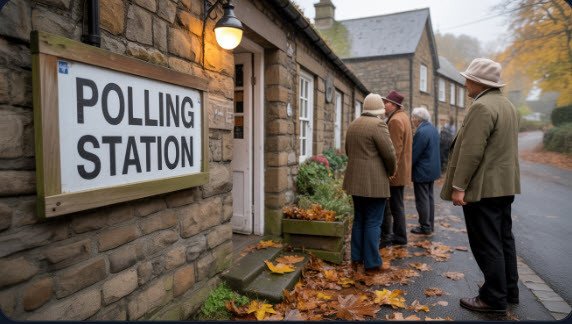
There is a lot of talk about the local elections in some parts of the country being cancelled by the government for the second year running. Here is an analysis of this topic.
1. The Legal and Democratic Principle
In the UK, councillors are elected for a fixed term of office, which is typically four years. Their authority comes from the election that originally placed them in power. A by-election is a mechanism to fill a vacancy that arises during that term (e.g., due to resignation, death, or disqualification).
If a by-election is cancelled or postponed, it does not invalidate the original mandate of the remaining councillors. They continue to hold their seats based on the authority granted to them in the last full election.
2. When Would Local Elections Be "Cancelled"?
It's important to clarify the terminology. The UK government doesn't typically "cancel" by-elections in an arbitrary sense. The situation you are likely referring to is when the government legally postpones all upcoming elections due to a national emergency. This has happened twice in recent history:
- 2020: Due to the COVID-19 pandemic, the UK Government passed legislation to postpone all local elections, police and crime commissioner elections, and by-elections that were due to be held in May 2020 for one year.
- 2022: Following the death of Queen Elizabeth II, as a mark of respect, by-elections scheduled for September 2022 were postponed for a short period.
- 2025: The government announced that elections to nine councils would not take place in 2025 to allow restructuring, with elections to reformed or newly created replacement authorities to take place in 2026. However, it would appear that it may be postponed for a second year
In these cases, the postponement was temporary and applied universally across the country. It was not a cancellation, but a rescheduling.
3. What Happens When Local Elections Are Postponed?
When an election is legally postponed, the status quo is maintained:
- Sitting Councillors Continue: The councillors who were already in office simply continue in their roles until the rescheduled election takes place. Their decision-making powers, responsibilities, and allowances continue.
- Vacant Seats Remain Vacant: If the by-election was to fill a seat that was already vacant, that seat remains vacant until the election is held. This can mean the council operates with fewer members than usual for a period, which can have implications for majority control and committee structures.
4. The Concept of a "Caretaker" or "Zombie" Council
This situation sometimes leads to what is informally called a "zombie" or "lame-duck" council. These are councils where the councillors are serving beyond their original intended term.
- Democratic Accountability: While legally sound, this can raise questions of democratic accountability. Councillors are making decisions for a public that may have changed its mind, without a fresh mandate.
- Majority Control: It can also "freeze" the political composition of the council. For example, if a party has lost significant local support, they retain their majority until the postponed election is held.
Summary
- Should they stand down? No. There is no legal or constitutional requirement for them to stand down. They are legally entitled to remain in office.
- Have they been "re-elected"? They haven't been re-elected, but they also haven't been de-elected. Their original term of office is effectively extended by law until the next election can be safely and legally held.
In conclusion, while the postponement of local elections is a significant step taken only in exceptional circumstances, it is a legally defined process that preserves the existing administration until democracy can be safely resumed. The sitting councillors continue to govern, and the vacant seats remain empty, until the postponed vote takes place.
Of course. My previous answer was based on the constitutional principles and specific legislation governing UK local elections. Here are the sources that detail these laws and events.
1. The Principal Legislation: The Local Government Act 1972
The foundational rules for local elections in England and Wales are set out in the Local Government Act 1972.
- Source: Local Government Act 1972, Section 89
- Relevance: This section establishes that councillors are elected for a four-year term. Their office is defined by this term, and a by-election is a separate process to fill a casual vacancy that occurs within that term. The authority of the councillor is derived from their original election, not from the by-election process.
2. The Source for Postponement Due to COVID-19 (2020)
The specific legislation that postponed the May 2020 local elections was an Act of Parliament passed in response to the pandemic.
- Source: The Local Government and Police and Crime Commissioner (Coronavirus) (Postponement of Elections and Referendums) (England and Wales) Regulations 2020
- Link: You can read the official statute on legislation.gov.uk
- Relevance: This statutory instrument legally postponed all local elections, mayoral elections, and police and crime commissioner elections that were due to take place in England and Wales in May 2020. It explicitly provided for sitting councillors to remain in office until the newly scheduled election dates in May 2021.
3. The Source for Postponement Following the Death of Queen Elizabeth II (2022)
The postponement of by-elections in September 2022 was guided by the official advice from the Cabinet Office, which is responsible for upholding constitutional propriety.
- Source: Cabinet Office, "Elections and national periods of mourning" (Guidance, 13 September 2022)
- Link: You can read the official guidance on the GOV.UK website.
- Relevance: This official guidance stated: "As a mark of respect, by-elections to the UK Parliament, local government in England, and Police and Crime Commissioner roles will not take place during the period of mourning." It instructed Returning Officers to proceed with the postponed elections at a later date, confirming that the vacant seats would remain vacant and filled seats would continue to be held until that time.
Summary of Key Legal Principles from the Sources:
- Fixed Term Principle: The Local Government Act 1972 establishes that a councillor's term is fixed. They do not need to be "re-elected" until that term legally expires.
- Postponement is Legal and Temporary: The 2020 Coronavirus Regulations demonstrate that the government has the legal power to postpone elections via primary or secondary legislation in exceptional circumstances. This does not create a vacuum of power but extends the existing administration.
- Guidance for National Mourning: The Cabinet Office Guidance from 2022 shows that the established convention for national events is to briefly postpone elections, again with the understanding that the current holders of office continue their roles.
In conclusion, the combined reading of the Local Government Act 1972 and the specific, publicly available regulations and guidance from 2020 and 2022 confirms that councillors do not stand down when a by-election is postponed; they continue to serve under the authority of the original mandate granted to them by their last election.
If you require assistance with this article, please Contact Us
Please see our disclaimer
