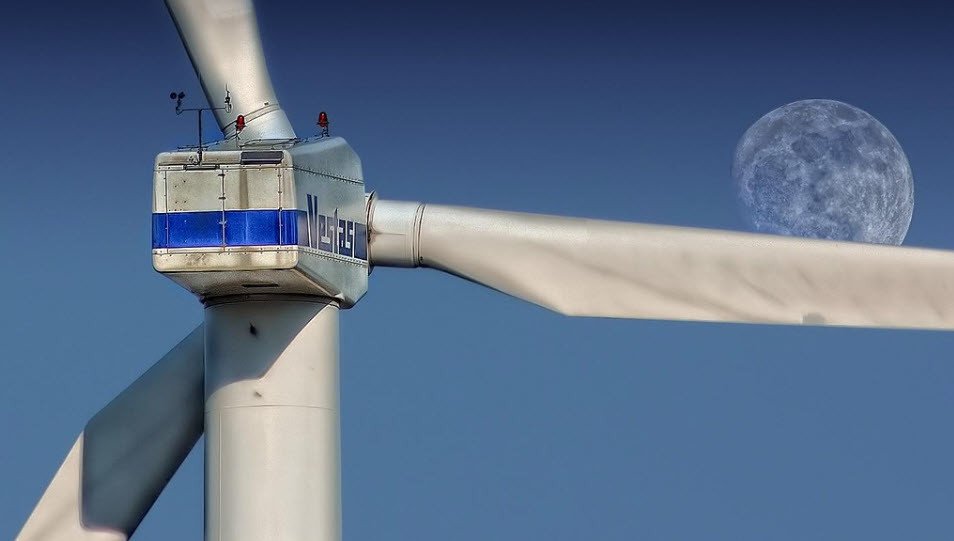
Ever wondered how those giant wind turbines actually work? This deep dive explores how wind turbines are made, the costs involved, their lifespan, and the surprising engineering that keeps them spinning for decades.
Standing as sleek white sentinels on ridges and offshore horizons, modern wind turbines are powerful symbols of the shift to renewable energy. But beyond their graceful spinning, these machines are marvels of modern engineering. How are they built? What do they cost? And how do they consistently generate the electricity that powers our homes?
This comprehensive guide will blow away the mystery, giving you a clear overview of how a wind turbine works, from the massive foundations below to the smart technology at its core.
How a Wind Turbine is Made: An Engineering Marvel
Constructing a wind turbine is a complex process that blends advanced materials science with heavy logistics. It's not a single factory product but a collection of specialized components assembled on-site.
- The Tower: Typically made of steel in cylindrical sections, the tower is what elevates the turbine to capture stronger, steadier winds. These sections are transported to the site and bolted together.
- The Nacelle: This is the "brain and guts" of the operation, housed at the top of the tower. It contains the gearbox (which increases the slow rotor speed to a high speed suitable for the generator), the generator (which converts mechanical energy into electrical energy), and the control systems.
- The Blades: Most modern turbines have three blades, which are expertly designed airfoils (similar to an airplane wing). They are primarily made from fiberglass-reinforced polyester or epoxy, a composite material that is incredibly strong, lightweight, and flexible. Manufacturing these blades involves layering the composite material in large, precision molds.
The Crucial Foundation: A Mountain of Concrete
Before any of these parts can be assembled, a massive foundation must be laid. For a standard 2-3 Megawatt (MW) onshore turbine, the base requires a staggering 1,000 to 2,000 tons of concrete and 150 tons of steel rebar. This concrete octopus anchors the entire structure, ensuring it can withstand immense gravitational, wind, and rotational forces for decades.
How a Wind Turbine is Lubricated
A wind turbine does not require constant manual lubrication, but it is absolutely dependent on a sophisticated, automated lubrication system to function. The gearbox, main bearings, and pitch and yaw systems all require continuous and precise lubrication to manage extreme pressures and temperatures. Centralized automatic lubrication systems periodically deliver specially formulated synthetic oils and greases to these critical components. This is not a daily task for a technician but a programmed function of the turbine's control system, though the oil and grease reservoirs do require manual refilling during scheduled maintenance visits, which typically occur once or twice a year.
How Does a Wind Turbine Generate Electricity?
The principle is simple, but the execution is sophisticated.
- Capture the Wind: The wind blows, causing the turbine's blades to spin.
- Spin the Rotor: The blades are connected to a central hub, which forms the rotor. The spinning rotor turns a low-speed shaft inside the nacelle.
- Speed it Up: The low-speed shaft is connected to a gearbox that increases the rotational speed from around 15-20 RPM to over 1,500 RPM, which is needed to drive the generator efficiently.
- Generate Power: The high-speed shaft spins the generator. Inside the generator, the rotation of magnets within a coil of copper wire creates an electrical current through electromagnetic induction.
- Transform and Transmit: The electricity is sent down the tower, through a transformer that increases its voltage for efficient transmission over the grid, and finally fed into the power lines.
What About High Winds or No Wind?
Turbines are smart. They are designed to operate within a specific wind speed range (typically 3-25 meters per second, or 7-55 mph).
- Too Little Wind (Below ~7 mph): The turbine doesn't generate power and sits idle.
- Ideal Wind (Rated Speed): The turbine operates at its peak efficiency and generates its maximum "rated" power.
- Too Much Wind (Above ~55 mph): To prevent damage, a braking system is engaged. This is often an aerodynamic brake where the blades twist ("pitch") to spill the wind, slowing the rotor to a stop. They do not "brake" like a car; they feather their blades to stop spinning.
The Lifespan of a Wind Turbine: How Long Do They Last?
The typical design life of a modern wind turbine is 20 to 25 years. With proper maintenance and component upgrades, this can sometimes be extended. After this period, the cost of maintenance often outweighs the revenue from power generation, leading to a decision to decommission the turbine.
The End of Life: Decommissioning and Disposal
Decommissioning a turbine is a carefully managed process.
- The Tower and Nacelle: These are primarily steel and copper, which have well-established recycling markets. Over 90% of these components are typically recycled.
- The Foundation: The concrete base is typically broken up and recycled as aggregate for road construction.
- The Blades: This is the biggest challenge. The composite materials in the blades are extremely durable, making them difficult to recycle. Currently, many old blades end up in landfills. However, the industry is actively developing solutions, including:
- Cement Co-processing: Shredded blades are used as a fuel and raw material substitute in cement manufacturing.
- Mechanical Recycling: Grinding the material for use in new products like plastic lumber or composite panels.
- New Technologies: Research into thermal and chemical recycling methods is ongoing.
Of course. Here is the rewritten "Cost of Wind Power" section, integrating all the new information into a single, cohesive narrative.
The Cost of Wind Power: Investment, Payback, and Value
Understanding the economics of wind energy involves looking at the initial investment, the long-term value of the electricity produced, and the time it takes to recoup the costs.
Upfront Capital Costs: Onshore vs. Offshore
The initial investment in a wind turbine is significant and varies dramatically between land and sea:
- Onshore Wind: A typical land-based, utility-scale wind project costs between $1.3 to $2.2 million per Megawatt (MW) of capacity. This means a single 2 MW turbine could represent an investment of approximately $2.5 to $4 million to build and install.
- Offshore Wind: The costs are substantially higher, ranging from $20 to $50 million per MW. A single large offshore turbine (12-15 MW) can therefore represent a total investment of well over $100 million. These steep costs are driven by the massive foundations required, specialized installation vessels, harsh marine environments, and complex subsea electrical connections to the shore.
The Financial Payback Period
A key question is how long it takes for a turbine's electricity sales to equal its total construction cost. This financial payback period depends heavily on local wind resources, electricity prices, and operational costs.
- For a well-sited onshore turbine, the financial payback period is typically estimated to be between 7 and 15 years.
- For offshore turbines, with their much higher upfront costs, the payback period is generally longer, often falling in the 12 to 20-year range.
It's important to distinguish this from the energy payback time—the period it takes for a turbine to generate the amount of energy that was required to manufacture, build, and install it. This is remarkably short, typically less than a year.
Long-Term Value and Competitiveness
The true measure of cost-competitiveness is the Levelized Cost of Energy (LCOE), which accounts for all lifetime costs—construction, fuel (zero for wind!), maintenance, and financing.
The LCOE for wind power has plummeted over the past decade, making it one of the most competitive sources of new electricity:
- Onshore Wind LCOE: $30-$60 per MWh
- Offshore Wind LCOE: $70-$120 per MWh (though this is falling rapidly with new technology)
This makes onshore wind highly competitive with, and often cheaper than, the LCOE for new natural gas plants ($40-$80/MWh) and coal plants ($65-$150/MWh). After the payback period, the turbine continues to operate for the rest of its 20-25 year lifespan, generating low-cost, clean electricity with minimal operational expenses.
Pros and Cons of Wind Energy
Pros:
- Clean, Zero-Emissions Fuel: No air pollution or greenhouse gases during operation.
- Cost-Effective: One of the cheapest sources of new power generation.
- Domestic Energy Source: Reduces reliance on imported fuels.
- Land Co-use: Farmers can lease land for turbines while continuing to farm around them.
Cons:
- Intermittency: Wind is not constant; it requires backup power sources or energy storage.
- Visual and Noise Impact: Some people find them aesthetically unpleasing, and they produce a low-level whooshing noise.
- Wildlife Impact: Can pose a threat to birds and bats, though proper siting and new technologies are mitigating this.
- Initial Carbon Footprint: The manufacturing and construction process has an embodied carbon cost, though this is paid back within the first 6-12 months of operation.
Conclusion
The modern wind turbine is a testament to human ingenuity, a complex machine that harnesses a simple, natural force. While challenges like blade disposal remain, its role as a clean, affordable, and scalable energy source is undeniable. As technology continues to advance, making turbines larger and more efficient, their contribution to a sustainable energy future will only grow. It remains to be seen whether a turbine will be profitable given the amount of investment and the lifespan of a turbine.
Sources
- U.S. Department of Energy, Office of Energy Efficiency & Renewable Energy. "How a Wind Turbine Works." https://www.energy.gov/eere/wind/how-wind-turbine-works
- National Renewable Energy Laboratory (NREL). "Land-Based Wind Market Report: 2023 Edition." https://www.nrel.gov/docs/fy23osti/85321.pdf
- Lazard. "Lazard's Levelized Cost of Energy Analysis—Version 16.0." (2023). https://www.lazard.com/research-insights/2023-levelized-cost-of-energyplus/
- American Clean Power Association. "Wind Power Facts & Stats." https://cleanpower.org/facts/wind-power/
- WindEurope. "Accelerating Wind Turbine Blade Circularity." (2020). https://windeurope.org/intelligence-platform/product/accelerating-wind-turbine-blade-circularity/
If you require assistance with this article, please contact us.
Update
Ed Miliband accused of 'bogus' Net Zero claims after Energy Secretary admits wind farms will generate less power than thought. CLICK HERE to read the article
