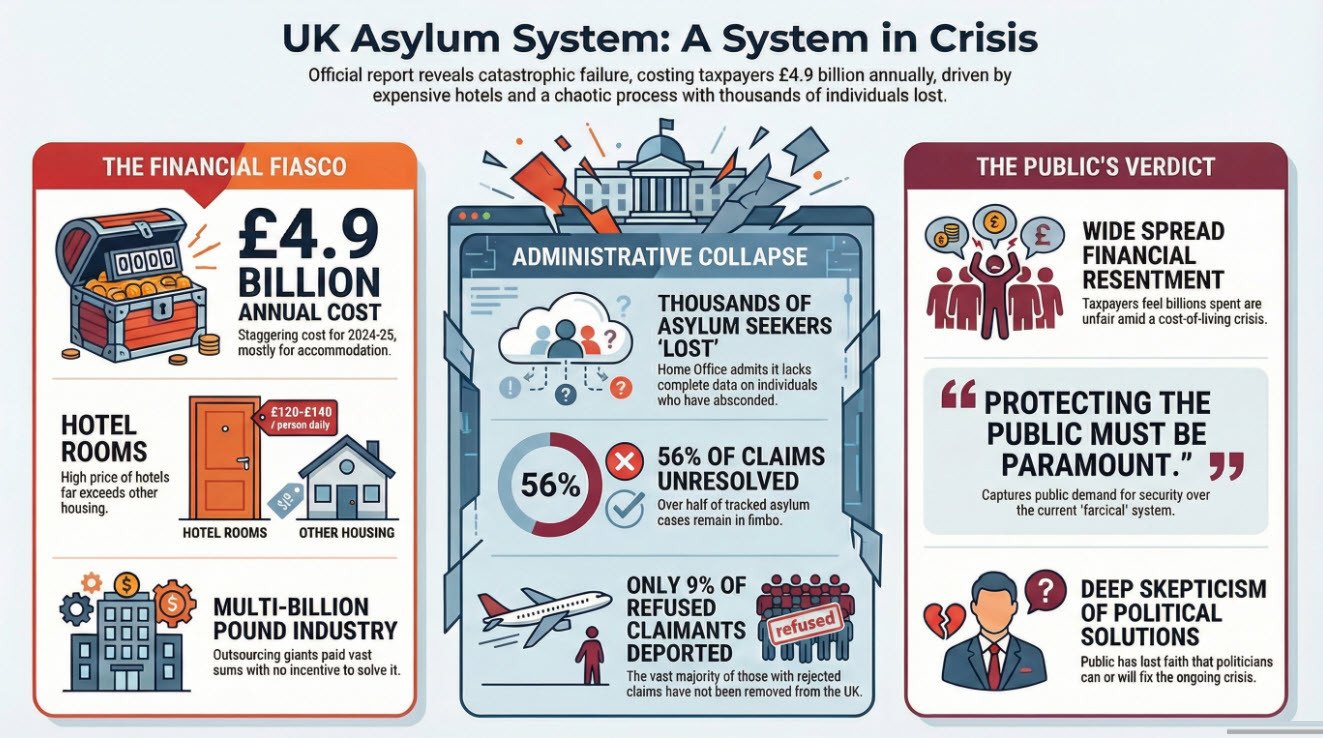
The UK's asylum system is not just broken; it is operating in a fog of its own making, with catastrophic financial and social consequences. According to the National Audit Office (NAO) report, the system consumed a staggering £4.9 billion of taxpayer money in 2024-25 alone. The vast majority of this expenditure was funneled into providing accommodation for asylum seekers, primarily through what has become a symbol of governmental failure: the asylum hotel.
The Hotel & HMO Bill: A Bottomless Pit
While the NAO report highlights the overall accommodation cost, the specifics paint a grim picture of dependency on costly, temporary solutions.
- Hotel Reliance: At its peak under the previous government, over 50,000 asylum seekers were housed in approximately 400 hotels across the country. The daily cost per person in hotel accommodation has been widely reported to be between £120 and £140. This represents a monumental drain on public funds, with local economies often disrupted and community tensions heightened.
- Shift to HMOs and Larger Sites: In an attempt to reduce the eye-watering hotel bill, the government has been attempting to move asylum seekers into Houses in Multiple Occupation (HMOs) and larger, often contentious, sites like former military barracks and barges. While cheaper than hotels—with estimated costs around £30-£50 per person per day for HMOs—this shift has not been without significant local opposition, planning disputes, and concerns over living conditions. The NAO warns that the £4.9bn figure is likely an underestimate, as it excludes massive ancillary costs like legal aid and the financial burden shifted to local councils who must support successful claimants.
The "Lost Thousands": An Asylum System in the Dark
Perhaps more alarming than the financial cost is the administrative chaos. The NAO delivers a withering verdict: "The Home Office does not hold complete data on the number who absconded from the asylum system."
- A Data Black Hole: Tracking 5,000 claims from January 2023, the NAO found that by September 2024, a shocking 56% of cases remained unresolved, with 41% in bureaucratic "limbo." Of those whose claims were refused, only 9% had been deported. The Home Office cannot say how many failed asylum seekers are facing enforcement, nor why deportation attempts fail.
- The Absconder Mystery: As Shadow Home Secretary Chris Philp stated, the government has likely "lost track of thousands" of individuals. These "absconders" may have vanished into the black-market economy, left the UK voluntarily, or tragically died. The state simply does not know. This fundamental lack of control fuels public perception of a system that is not just expensive, but dangerously lax.
The British Public's Mood: Anger, Frustration, and a Sense of Betrayal
The NAO report has crystallized a deep-seated public anger that has been simmering for years. The British mood can be characterized by several key emotions:
- Financial Resentment: The phrase "Hard-working taxpayers are shelling out billions," used by Chris Philp, resonates powerfully. Amid a cost-of-living crisis, the imagery of billions spent on hotel accommodation for asylum seekers—while public services strain—is politically toxic and feels profoundly unfair to many.
- Loss of Control and Security: The revelation that the Home Office doesn't know who has arrived or where they are strikes at the heart of the state's basic contract: to protect its borders and maintain order. Alp Mehmet of Migration Watch UK captured this sentiment, calling for the UK to quit the ECHR so that "protecting the public must be paramount." The narrative of a system that is a "farce" is potent.
- Skepticism of Political Solutions: The report lands just weeks after another blasted the "incompetent" department for "squandering" billions. Home Secretary Shabana Mahmood's proposed reforms—streamlining appeals and offering temporary status—are met with deep skepticism. With Labour retaining ECHR membership, a key block on deportations in the public's eye, many doubt any real change is coming. The fury from "all sides" reported in the media underscores a widespread belief that the political class is failing to grasp or address the severity of the crisis.
Conclusion: A Crisis of Confidence
The UK's asylum system is trapped in a vicious cycle: monumental costs fund a dysfunctional process that lacks basic data and control, which in turn erodes public trust and fuels political volatility. The £4.9bn figure is not just a line in a budget; it is a symbol of waste and mismanagement. The thousands of missing asylum seekers are not just a data gap; they represent a fundamental breach of sovereign responsibility.
CLICK HERE to read our article on the Channel crossings.
Until the Home Office can answer basic questions—who is here, where they are, and how to humanely but effectively process claims—the financial fiasco will continue, and public anger will only grow. The NAO report is not merely an audit; it is an indictment of a system in catastrophic failure in the asylum system, with the British public paying the price both in pounds and in peace of mind.
Our Opinion
The scale of this expenditure reveals an uncomfortable and deeply cynical truth: the asylum system has become a multi-billion-pound industry, and powerful corporate interests are incentivized for it to continue, not conclude.
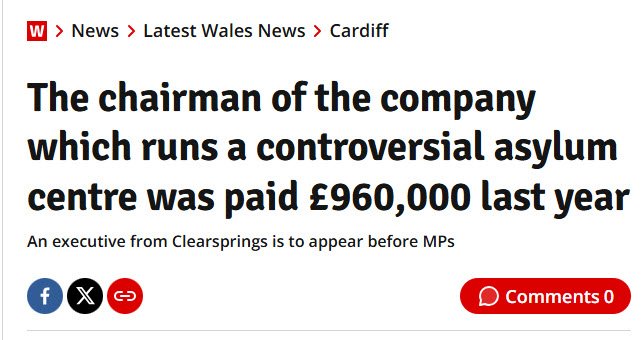
A network of outsourcing giants, from Serco and Clearsprings to Mears and countless subcontractors, have secured vast government contracts worth hundreds of millions annually to manage accommodation, catering, and security. The recent tender of a massive new multi-year contract for asylum accommodation services at Heathrow, stretching well into the next decade, is a stark indicator that the state is institutionalizing this crisis as a permanent, lucrative revenue stream. This symbiosis between Whitehall and corporate contractors—where the government pours public money into private coffers to manage a problem it appears to have no genuine will to solve—fosters a perception that the ‘migrant crisis’ is a golden goose.
CLICK HERE to read just one clear example of the profits that are being made
This corporate capture of the system dovetails horrifically with rising public fury over violent and predatory crimes committed by some asylum seekers. Daily reports of murders, sexual assaults, thefts, and large-scale fraud are no longer seen as tragic anomalies but as a direct, predictable consequence of a system engineered for profiteering chaos rather than controlled, secure processing.
The public correctly perceives that while their safety is compromised and their taxes are squandered, a select cohort of corporations and shareholders are making fortunes from the perpetual dysfunction. Until this perverse financial incentive is dismantled, the fiasco—and the public’s justifiable rage—will only intensify.

Disclaimer
For important information regarding the sourcing, purpose, and limitations of this content, please refer to the full disclaimer located in the footer of this website.
Sources: National Audit Office Report (2024), "Asylum fiasco without end: Devastating Whitehall watchdog report finds Home Office DOESN'T know how many asylum seekers have absconded - or true cost to taxpayers" (Daily Mail, December 2025), Migration Watch UK.
If you want assistance with this article, please Contact Us
