Introduction
Tony Blair is a prominent British politician with a net worth estimated at $60 million. He is married to Cherie Blair, an English barrister, writer, and prominent campaigner for women's rights. They married on 29 March 1980, and have four children together. He held the position of Prime Minister of the UK from 1997 to 2007. Prior to that, he was the Leader of the Labour Party. Subsequently, he became executive chairman at the Tony Blair Institute for Global Change. Blair's administration is recognized for its progressive constitutional reforms, military actions in Kosovo and Sierra Leone, as well as its policies in support of the War on Terror.
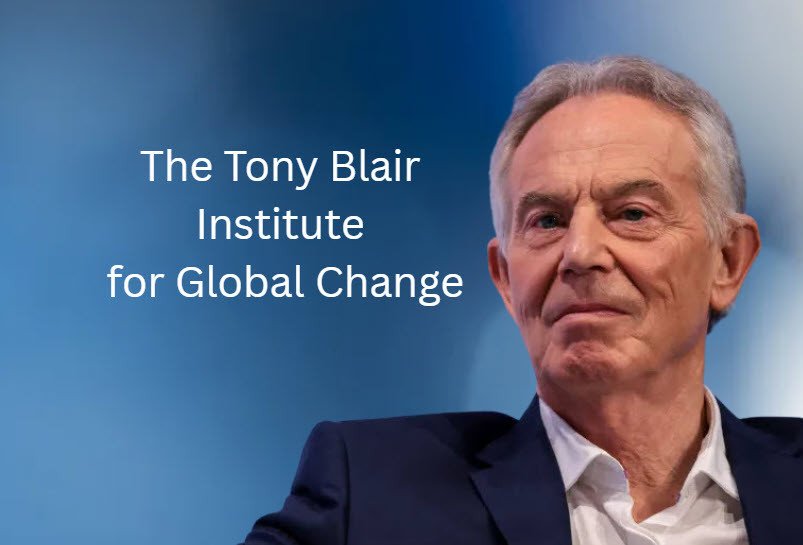
The Tony Blair Institute for Global Change is a non-profit organization founded by former UK Prime Minister Tony Blair. Established with the mission of supporting political leaders and governments to build open, inclusive, and prosperous societies in a globalized world, the institute focuses on addressing some of the world's most pressing challenges. It operates across several thematic areas, including governance, technology, the economy, and extremism. The institute works by providing strategic advice, developing policy solutions, and fostering innovation to help countries navigate complex modern issues. Through its initiatives, the Tony Blair Institute aims to leverage the power of technology and globalization to drive positive change and improve the quality of governance worldwide.
Here is a list of the key leadership and directors at the Tony Blair Institute for Global Change (TBI), along with relevant links to their official biographies.
The institute's leadership is structured around a senior executive team and a separate board of directors (for the UK charity) that provides governance and oversight.
1. Executive Leadership
This is the core senior management team that runs the day-to-day operations of the institute.
- Executive Chairman: Tony Blair
- The former Prime Minister of the UK is the founder and executive chairman, setting the overall strategic direction of the institute.
- Link: https://www.institute.global/people/tony-blair
- Chief Executive Officer: David Waboso
- As CEO, David Waboso is responsible for the global management and performance of the institute.
- Link: https://www.institute.global/people/david-waboso
- Chief Strategy Officer: Rania Hammad
- Oversees the institute's global strategy, partnerships, and policy priorities.
- Link: https://www.institute.global/people/rania-hammad
- Chief Operating Officer: Sarah Sands
- Manages the institute's internal operations, including finance, IT, and legal functions.
- Link: https://www.institute.global/people/sarah-sands
- Chief of Staff, Office of Tony Blair: Liz Lloyd
- A key advisor to Tony Blair and manages his office and engagements.
- Link: https://www.institute.global/people/liz-lloyd
- Vice Chairman: Ian Graham
- A senior advisor focused on strategic projects and client relationships.
- Link: https://www.institute.global/people/ian-graham
- Managing Director, Africa: Emmanuel Dooc
- Leads the institute's extensive work and teams across Africa.
- Link: https://www.institute.global/people/emmanuel-dooc
- Managing Director, Tech and Public Policy: Sophia Ignatidou
- Leads the institute's policy work on technology and its impact on society.
- Link: https://www.institute.global/people/sophia-ignatidou
- Managing Director, Europe and Middle East: Tera Vogt
- Leads TBI's advisory work and government partnerships in Europe and the Middle East.
- Link: https://www.institute.global/people/tera-vogt
Link to the Full Leadership Team Page:
You can find a complete and updated list of all Managing Directors and other senior leaders here:
https://www.institute.global/leadership

2. Board of Directors (Tony Blair Institute for Global Change - UK Charity)
This is the governing board for the UK charitable entity. It includes both executive directors from within TBI and independent non-executive directors.
- Chair: Simon Moran
- Senior Advisor at Mubadala Investment Company and former Managing Director at J.P. Morgan.
- Tony Blair (Executive Chairman of TBI)
- David Waboso (Chief Executive Officer of TBI)
- Sarah Sands (Chief Operating Officer of TBI)
- Nneka Ewulu-Williams (Non-Executive Director)
- Chief Operating Officer at Systemiq Capital.
- Martin Grant (Non-Executive Director)
- Senior Advisor at Brunswick Group.
- Simon McDougall (Non-Executive Director)
- Managing Director for Technology and Innovation at the International Association of Privacy Professionals (IAPP).
- Catherine R. W. Whitaker (Non-Executive Director)
- Chair and Trustee of several arts and education organizations.
Link to the Official Board List (UK Companies House):
The Tony Blair Institute for Global Change is a registered charity and private company limited by guarantee in the UK. The most official and legally required record of its directors is filed with Companies House.
- Companies House Listing for "TONY BLAIR INSTITUTE FOR GLOBAL CHANGE":
https://find-and-update.company-information.service.gov.uk/company/09689494/officers
Link to the Charity Commission Record (England and Wales):
This page also lists the trustees (who are the directors) and provides financial information.
- Charity Commission Listing:
https://register-of-charities.charitycommission.gov.uk/charity-search/-/charity-details/401024/trustees
Summary
- For the operational leadership (CEO, COO, Managing Directors), use the main institute website: https://www.institute.global/leadership
- For the official, legal list of directors/trustees for the UK entity, the definitive sources are the UK Companies House and Charity Commission websites.
The leadership team is dynamic, so the institute's own website is the best place for the most current roles and biographies, while the government sites provide the formal, statutory record.
How many employees does Blair control, worldwide?
Based on the most recent official filing, the Tony Blair Institute for Global Change (TBI) has more than 800 employees worldwide.
Source: The Tony Blair Institute for Global Change's official filing with the UK Companies House for the accounting period up to 31 March 2023.
The specific document, the "Full accounts for a small company," filed on 21 December 2023, includes a strategic report from the directors. Within this report, under a section outlining the institute's development and performance, it states:
"The Institute now has over 800 staff worldwide."
Direct Link to the Filing:
You can view the PDF document on the UK Government's Companies House website. The statement is on page 2 of the strategic report.
- Companies House Filing (PDF): https://find-and-update.company-information.service.gov.uk/company/09689494/filing-history (Look for the document titled "Accounts for a small company" made up to 31 March 2023).
Important Context:
- Growing Number: The institute has been growing rapidly. Previous years' filings reported 700 staff in 2022 and 500 in 2021. The "over 800" figure is the most recent official data.
- Global Presence: These employees are spread across TBI's headquarters in London and its many offices in Africa, the Middle East, Europe, and North America, supporting its mission of providing strategic advice and policy support to governments.
For the very latest figure, which may now be higher, you would need to look for a more recent press release or the next annual report from the institute itself. However, the Companies House filing remains the most recent official and audited source.
Is Blair's son, Euan, involved in pushing Digital ID?
Euan Blair, the son of former Prime Minister Tony Blair, is not involved with the Tony Blair Institute for Global Change (TBI).
Euan Blair has pursued a separate and distinct career path in the education and technology sector. He is the founder and CEO of Multiverse, a highly successful tech startup (now a "unicorn" company) that focuses on building an alternative to university through professional apprenticeships.
Here are the key details:
- No Formal Role: Euan Blair holds no position—executive, advisory, or otherwise—within the Tony Blair Institute. He is not on the leadership page, the board of directors, or listed in any official capacity.
- Separate Career Focus: His professional focus and public profile are entirely centered on Multiverse. His work is in the field of EdTech and skills training, which, while related to public policy, is a separate commercial enterprise.
- No Public Links or Collaborations: There are no public records, press releases, or projects indicating a collaboration between Multiverse and the Tony Blair Institute. The two organizations operate in different spheres.
In summary, Euan Blair has built his own highly prominent and successful company entirely independent of his father's institute. There is no evidence of any involvement or overlap between his work and the activities of the Tony Blair Institute for Global Change.
You can view his professional profile on the Multiverse website here: https://www.multiverse.io/en-GB/about-us
Blair and Digital ID
Tony Blair first pushed for a national identity card system in the early 2000s, reigniting a long-dormant policy debate. Although the idea had been considered during John Major’s Conservative government in the 1990s, it was under Blair’s Labour administration that concrete plans were developed. The initiative evolved into what became known as the National Identity Card scheme, later seen as a precursor to today’s digital ID proposals.
Blair initially opposed ID cards during the 1995 Labour Party conference, criticizing the Conservatives' plans as wasteful. However, following the 9/11 terrorist attacks in 2001, his stance shifted significantly, driven by growing concerns over national security, identity fraud, and illegal immigration.
Key Objectives of the 2004–2006 Scheme
The government formally introduced the ID card proposal in 2004, with the Identity Cards Act 2006 eventually passing into law. The stated goals of the scheme were multi-faceted:
- Disrupting terrorism and organised crime by preventing the use of false identities
- Reducing identity fraud and benefit fraud
- Ensuring only eligible individuals accessed public services
- Making it easier for citizens to verify their identity
While immigration control became a public talking point, internal documents and analyses suggest terrorism prevention was the primary driver behind Blair’s push—more so than illegal immigration.
Legislative Path and Implementation
The Identity Cards Bill was introduced in 2004 and passed after contentious parliamentary debates. It received Royal Assent in 2006, establishing:
- National Identity Cards with biometric data (e.g., fingerprints)
- A central database called the National Identity Register (NIR), designed to store up to 50 categories of personal data per individual
The rollout began in 2008 with a pilot at Manchester Airport, targeting foreign nationals and certain UK citizens. However, by May 2010, only around 15,000 cards had been issued, and the system faced widespread criticism over cost, privacy, and effectiveness.
Why the Scheme Was Scrapped
After the 2010 general election, the new Conservative–Liberal Democrat coalition government moved swiftly to dismantle the program. Both parties had opposed the scheme during the campaign, citing:
- Civil liberties concerns over mass data collection
- High costs—estimated at £4.6 billion with little proven benefit
- Doubts about effectiveness in combating terrorism or illegal working
The Identity Documents Act 2010 repealed the 2006 law, scrapped the NIR, and invalidated all issued cards. Biometric residence permits for foreign nationals, however, continued under separate legislation.
Legacy and Revival Under Keir Starmer
Though Blair’s physical ID card scheme failed, the idea has resurfaced in digital form. Since 2023, the Tony Blair Institute (TBI) has actively advocated for a modern digital ID system, arguing it could streamline public services, reduce bureaucracy, and enhance security.
In September 2025, Prime Minister Keir Starmer announced plans for a mandatory digital ID to verify the right to work and rent, echoing Blair’s earlier ambitions but with a digital-first approach. Starmer’s government cites both immigration enforcement and citizen convenience as key motivations.
Critics, including civil liberties groups like Liberty and Big Brother Watch, warn of surveillance risks and a potential slide toward state overreach—echoing the same concerns raised during Blair’s era.
If you require assistance with this article, please Contact Us
Please see our disclaimer
