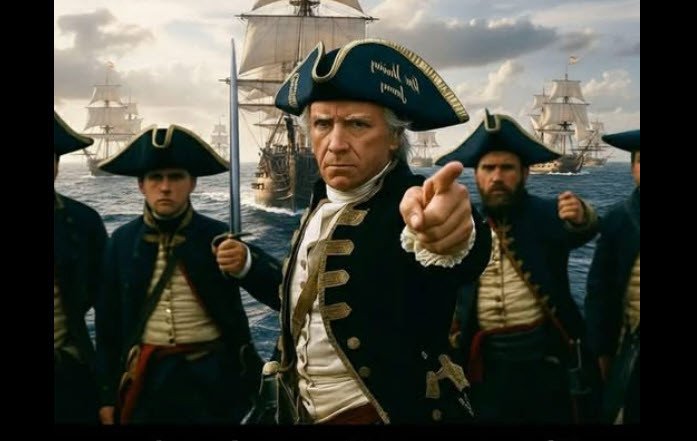
When we think of the fight to end the transatlantic slave trade, narratives often center on heroic abolitionists like William Wilberforce or the moral strife of nations like the United States. Yet, a critical and physically monumental chapter unfolded on the high seas, led by an unlikely actor: Great Britain. Having been the world’s foremost slave-trading nation, Britain’s about-face after passing the Slave Trade Act of 1807 was just the beginning. What followed was a costly, often dangerous, six-decade naval campaign that defined Britain's role in eradicating the trade—a story of principle, power, and profound sacrifice.
Great Britain Helped Eradicate Slavery
When Britain abolished the slave trade in 1807, the fight didn’t stop with a signature.
It began with courage.
For more than 50 years, Royal Navy ships sailed the West African coast, not for conquest or profit—but to stop one of the darkest trades in human history.
They went into treacherous waters where disease, storms, and enemy ships waited.
They didn’t always succeed. They didn’t always have perfect orders.
But they never backed down.
From 1808 to 1860:
- Over 1,600 slave ships were captured
- More than 150,000 people were rescued
- Countless sailors risked their lives in the name of freedom
This was one of the longest and most relentless missions ever carried out by the Royal Navy.
A reminder that history isn’t only made by laws and leaders—
but by those who fight for what is right, even when the world is looking away.
From Perpetrator to Policeman: The 1807 Pivot
Britain’s involvement in the slave trade was deep and profitable. By the late 18th century, British ships were responsible for transporting over half of all African captives across the Atlantic. The abolition movement, fueled by Enlightenment ideals, evangelical Christianity, and growing testimony of the trade’s horrors, slowly shifted public and political opinion.
The Slave Trade Act of 1807 made it illegal for British subjects to engage in the trade. But this was a domestic law. The true, global challenge was just beginning: how to stop other nations from continuing a lucrative enterprise.
The Royal Navy’s New Mission: The West Africa Squadron
To enforce its ban and pressure other nations, Britain deployed the Royal Navy. Initially a small force, it evolved into the permanent West Africa Squadron, based in Freetown, Sierra Leone. Its mission was unprecedented: patrol thousands of miles of West African coastline, intercept slave ships (often called "slavers"), and liberate captives.
This was no simple task:
- A Vast Theater: The Squadron’s area of operation stretched from West Africa to the Caribbean.
- Dangerous Work: Naval crews faced violent resistance, deadly diseases like malaria and yellow fever, and hazardous conditions. An estimated 1,587 Royal Navy personnel died in the campaign, mostly from disease.
- Legal & Diplomatic Challenges: Initially, the Navy could only detain British ships. Through relentless diplomacy, Britain negotiated treaties with other nations (like Spain, Portugal, and Brazil) granting the Royal Navy the right to search and seize their vessels suspected of slaving. International "Courts of Mixed Commission" were established to adjudicate seized ships.
Between 1808 and 1860, the West Africa Squadron seized approximately 1,600 slave ships and liberated around 150,000 Africans. Those freed were taken to places like Freetown, where they were settled, or to the British Caribbean as "apprentices."
The Staggering Cost: Blood and Treasure
Britain’s commitment came at an extraordinary price, challenging the notion that its actions were purely self-interested imperialism.
- Financial Cost: The campaign is estimated to have cost the British treasury the modern equivalent of tens of billions of pounds. At its peak, the Squadron consumed nearly 2% of the entire national budget—a vast sum for a peacetime naval operation.
- Human Cost: Beyond Royal Navy deaths, thousands more sailors were invalided due to illness. The moral and physical toll on crews stationed in what was called "the white man’s grave" was immense.
- Economic Sacrifice: Britain, having transitioned to an industrial economy, arguably benefited from undermining a mercantilist model based on slave labor. However, the direct financial outlay for suppression far outweighed any diffuse economic gain. Historians like David Olusoga have noted this was a rare instance where imperial power was used for a primarily humanitarian end, at a huge fiscal loss.
A Complex Legacy
This history is not without controversy or complexity.
- Motives were mixed: A blend of humanitarianism, economic shift, and a desire to exert moral and naval supremacy all played a role.
- Slavery persisted: While the trade was targeted, slavery itself within the British Empire wasn't abolished until the Slavery Abolition Act of 1833. Furthermore, the campaign suppressed the transatlantic trade but could not eradicate slavery within Africa or other global systems.
- Impact of Naval Action: The Squadron's presence dramatically increased the risk and cost of slaving, disrupting routes and helping to collapse the transatlantic trade by the 1860s. It was a decisive application of hard power to achieve a soft-power goal.
Conclusion: A Pivotal, Costly Chapter
The role of Great Britain in eradicating the Atlantic slave trade extends far beyond the passing of the 1807 Act. It was defined by the sustained, expensive, and lethal deployment of the Royal Navy as the world's first international anti-slavery police force. While Britain bears the historical responsibility of a primary architect of the slave trade, its subsequent fifty-year campaign to destroy it represents a paradoxical and pivotal chapter in global history—one where the empire wielded its supreme naval power not for territorial gain, but at a profound cost, for a principle. The West Africa Squadron remains a powerful, if ambiguous, testament to how nations can attempt to confront and amend the sins of their past.
Sources & Further Reading:
- Olusoga, David. The World’s War: Forgotten Soldiers of Empire (and related documentary works).
- Hochschild, Adam. Bury the Chains: The British Struggle to Abolish Slavery.
- "The West Africa Squadron and the Suppression of the Slave Trade," National Archives (UK).
- The British Museum, "The Slave Trade and its Abolition."
- Draper, Nicholas. The Price of Emancipation: Slave-Ownership, Compensation and British Society at the End of Slavery.
- "The Royal Navy and the Battle to End Slavery," Royal Museums Greenwich.
If you want assistance with this article, please Contact Us
