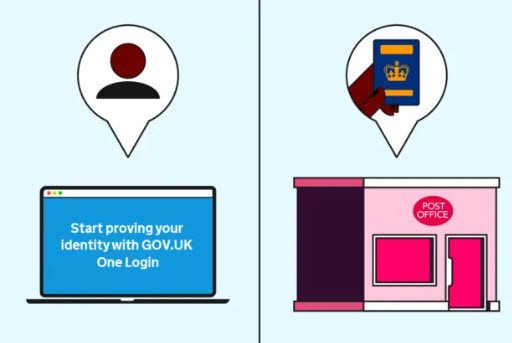
For years, accessing different UK government services online has meant juggling a confusing array of usernames and passwords. You have one login for your tax self-assessment, another for your driving licence, and yet another to check your State Pension.
The UK government aims to end this digital fragmentation with GOV.UK One Login. Touted as a simpler, faster, and more secure way to access government services, it's one of the most significant digital transformations in the public sector.
But what exactly is it? How does it work? And is it a positive step for citizens? This comprehensive guide breaks down everything you need to know about the proposed GOV.UK One Login system.
What is GOV.UK One Login?
GOV.UK One Login is a new, unified sign-in system being built by the Government Digital Service (GDS). Its primary goal is to replace the multiple existing sign-in methods across GOV.UK with a single, reusable digital identity.
Instead of remembering different credentials for different services, you will eventually be able to use one email and password, verified by a strong level of identity proofing, to access everything from filing taxes to applying for benefits.
The Problem It Solves: Moving Beyond GOV.UK Verify
The current landscape is messy. Key systems include:
- GOV.UK Verify: The previous flagship identity assurance system, which relied on third-party companies (like the Post Office and Digidentity) to verify your identity. It faced criticism for its complexity and lower-than-expected uptake.
- Government Gateway: A much older system used primarily for HMRC services, which uses a User ID and password.
- Various Departmental Logins: Individual logins for specific services like the DVLA or Universal Credit.
This patchwork creates a poor user experience, increases support costs, and can present security risks if people reuse weak passwords across multiple services.
How Does GOV.UK One Login Work?
The system is designed to be a seamless, integrated process. Here’s a step-by-step breakdown of how a user will interact with it:
- Initiation: You go to a government service that has integrated with One Login (e.g., to renew a passport).
- Sign-In or Create Account: You choose to sign in with your GOV.UK One Login. If you're new, you create an account using your email address and setting a password.
- Identity Verification (The First Time): To ensure security, you must prove your identity. This is done directly within the service by:
- Taking a photo of your biometric passport (using your smartphone's NFC chip).
- Scanning your photocard driving licence.
- Recording a short video selfie to match against your passport photo.
This process uses technology from companies like Onfido and iProov to perform these checks securely.
- Two-Factor Authentication (2FA): For ongoing security, you'll be required to set up 2FA, typically using an authenticator app on your phone, to protect your account from unauthorized access.
- Reusable Identity: Once your identity is verified to the required standard, you can use the same GOV.UK One Login to access other integrated services without having to prove who you are again.
The Pros: The Benefits of a Unified System
The move to a single login system promises significant advantages for both citizens and the government.
- A Simpler User Experience: This is the most touted benefit. One set of credentials is far easier to manage than dozens, reducing "password fatigue" and frustration.
- Increased Security: By moving away from older systems like the Government Gateway and implementing modern standards (like phishing-resistant 2FA and biometric checks), One Login aims to be more resilient against cyber threats. Centralizing expertise on one system also allows for faster responses to emerging security risks.
- Cost-Effectiveness for Government: Maintaining multiple legacy sign-in systems is expensive. Consolidating into one modern platform is expected to save taxpayer money in the long run. The National Audit Office (NAO) has highlighted the potential for efficiency savings [Source: National Audit Office, "Investigation into the GOV.UK One Login programme", 2023].
- Faster Access to Services: The streamlined identity verification process can significantly speed up applications for time-sensitive services, such as claiming benefits or proving your right to work.
- Better Support for the Digitally Excluded: The government states that for those unable to use the digital service, alternative routes (like phone and face-to-face services) will remain available.
The Cons: Challenges and Concerns
Despite the clear benefits, the program has faced scrutiny and raises several important questions.
- The "Single Point of Failure" Risk: A centralised system is an attractive target for hackers. A major data breach could potentially expose a vast amount of citizen data linked to a single identity. The government asserts that security is its "number one priority" and that data is stored and processed to high standards [Source: GOV.UK One Login Privacy Notice].
- Privacy and Mission Creep: There are concerns about how the data might be used in the future. Could it be used for increased surveillance or data sharing between departments without explicit consent? Clear, transparent legislation and oversight will be crucial to prevent "function creep."
- The Demise of a Market-Based Model: GOV.UK Verify was based on a "federated" model, where users could choose from several certified companies to verify their identity. One Login replaces this with a single, government-run provider, which some argue reduces user choice and market competition.
- Accessibility and Digital Exclusion: While alternatives exist, there is a risk that services become increasingly designed around the digital login, making it harder for those without smartphones, passports, or the necessary digital skills to access support. The NAO report noted that the programme was still developing its plans for assisting users who fail the digital identity checks.
- Implementation Costs and Delays: The programme has already cost hundreds of millions of pounds. As with any large government IT project, there is a risk of budget overruns and delays in rolling it out to all ~1,000 government services.

The Rollout Timeline: When Will It Be Fully Live?
The rollout is happening incrementally. It's a "gradual replacement" rather than a "big bang" switch-off.
- As of 2024, GOV.UK One Login is already live for several services, including the Apply for a Passport service, the View and Prove your Immigration Status service, and some HMRC tax services for agents.
- The government's plan is to continue migrating services from older systems like GOV.UK Verify and the Government Gateway over the coming years.
- There is no single "end date" for all old systems, but the direction of travel is clear: GOV.UK One Login is intended to be the future.
Conclusion: A Step Forward, With Caveats
The GOV.UK One Login represents a necessary and ambitious modernisation of the UK's digital infrastructure. The promise of a simpler, more secure, and unified experience for citizens is a compelling one that aligns with how people interact with digital services in every other part of their lives.
However, its success will ultimately depend on the government's ability to deliver on its security promises, maintain the highest standards of data privacy, and ensure that no one is left behind in the digital shift. For now, it's a project worth watching closely as it becomes the front door to public services for millions of people.
My Personal Opinion
The Government can simply not be trusted with storing and securing the populations data. It is a disaster waiting to happen, and when it does, it will affect you and me.
Check out my video:
Have you used GOV.UK One Login yet? Share your experience in the comments below!
If you require assistance with this article, contact us.
Please see our disclaimer
